Define the Viewer’s Question Before Making Scenes
A YouTube video maker should support a clear promise: what the viewer will learn, see or understand. Write that promise in ordinary language before choosing media. A long list of attractive shots does not establish a useful video on its own.
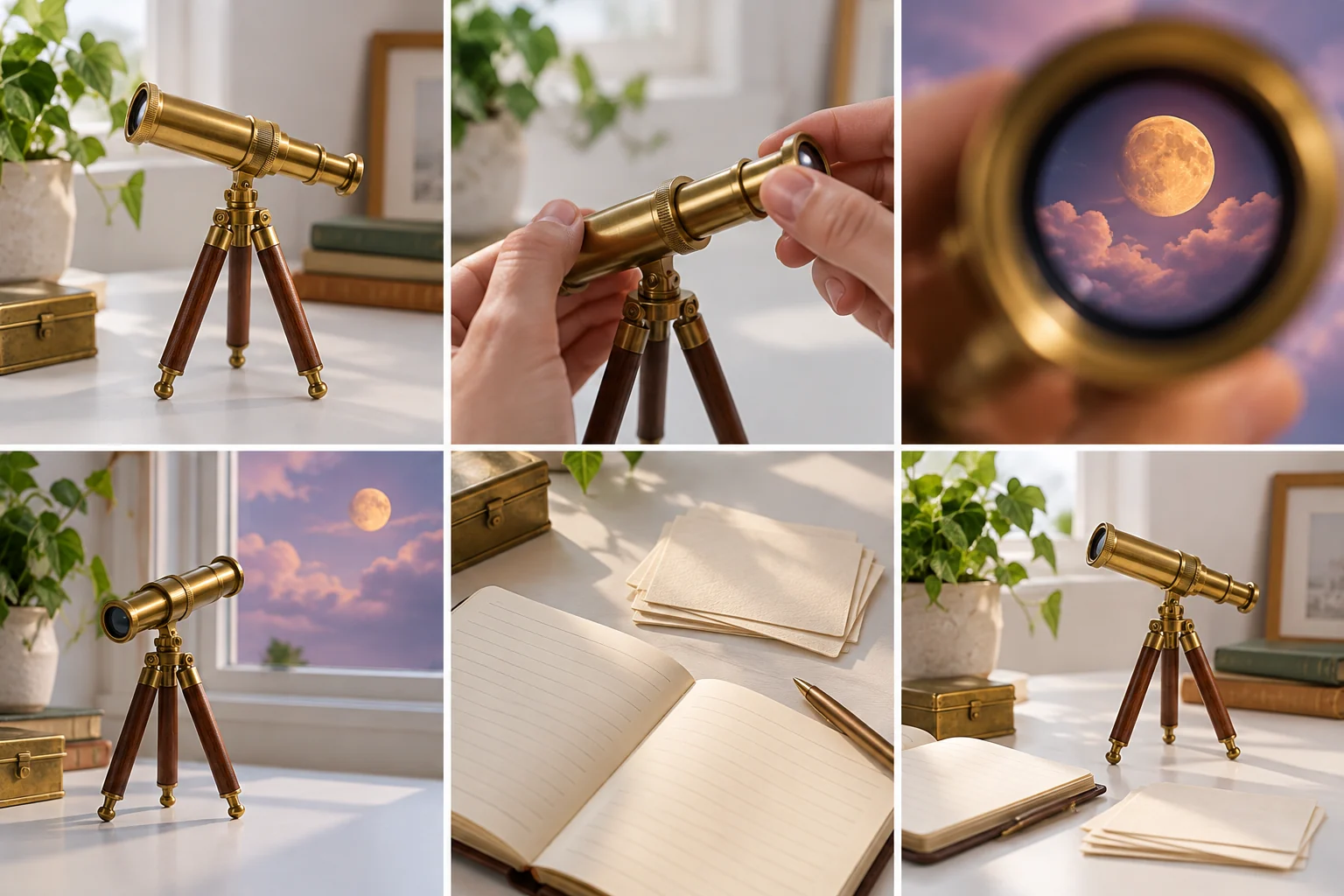
An original telescope demonstration might explain one adjustment and show its result. The opening can establish the object, the middle show the action and the ending confirm what changed. Keep the scope small enough to deliver accurately.
The MOVO input above starts original video planning. It does not upload to YouTube, choose account settings or guarantee views. Creative production and publication remain separate review steps.
Write an Opening the Video Can Fulfill
Show the subject or useful result early enough for the viewer to understand the topic. A recognizable opening image can communicate more than a long channel introduction. Keep any spoken promise consistent with the actual accepted sequence.
Use approved facts for explanations and demonstrations. If a scene is an imagined illustration, do not present it as evidence that a real experiment or event occurred. Visual realism does not verify the underlying claim.
Keep the script connected to the picture. Note what appears while each important idea is explained, and remove repeated information that delays progress without adding understanding.
Give Each Scene a Useful Role
Plan scenes as steps in the viewer's understanding. An establishing view, a close action and a clear result can support a tutorial without constant unrelated camera changes. Choose framing based on what the audience needs to notice.
For the telescope example, the adjustment should remain visible and the resulting view should match the explanation's purpose. A beautiful sky insert cannot replace an unclear demonstration. Review the difficult interaction before expanding the production.
Use original or appropriately authorized references and keep their roles explicit. A lighting reference should not become an unsupported source of factual detail or a reason to copy another creator's sequence.
Use the External Maker Within Its Actual Workflow
Fliki's YouTube video maker page describes its own script, media and narration workflow. Review current account, model and export conditions there. Its platform integrations and promotional comparison claims do not establish MOVO features.
Treat automatically assembled copy or media as a draft. Check whether it preserves the intended message, uses appropriate source material and avoids unsupported claims. A completed render still needs editorial review.
The telescope storyboard here is original conceptual artwork. It is not a provider result, a platform screenshot or evidence of measured audience performance.
Create Original Missing Scenes in MOVO
Describe the scene purpose, subject, action and visual direction in MOVO. Use appropriate approved references and test the moment the video depends on. Keep useful accepted work while revising the observed issue deliberately.
Review complete motion for subject continuity and clear action. A strong first frame does not prove the demonstration remains readable through the full clip. Keep exact labels and factual diagrams under suitable finishing controls.
Use appropriate tools for precise narration placement, cuts and captions. No automatic synchronization with an external editor or direct YouTube publishing connection is promised by this page.
Review the Saved Video and Publishing Copy
Watch the final export from beginning to end. Check the opening, main explanation, sound, exact text and ending. The video should fulfill the promise stated in its title and description without relying on the viewer to infer missing steps.
Inspect the current upload preview and destination requirements before publication. Review crops and readable details in the actual viewing context. This page does not make a monetization or distribution guarantee.
Retain the approved script, references, accepted scene assets and master video. Update dependent descriptions, captions and time references when the cut changes so future versions remain consistent.
Frequently Asked Questions
Does this page publish a YouTube video?
No. It starts an original MOVO brief; publishing remains a separate step.
What should I plan first?
The viewer’s question and the specific promise the video will fulfill.
Can a realistic illustration prove a factual claim?
No. Verify source facts and identify imagined illustrative scenes appropriately.
What makes a useful first scene test?
The important action or explanation the final video actually depends on.
Does AI creation guarantee views or monetization?
No. Audience response and platform eligibility are separate matters.
What should I review after editing?
The complete saved export, exact text, sound, ending and publishing copy.