GPT-5.6 Sol vs Terra vs Luna: Which Model Should You Use?

Start With the Official GPT-5.6 Model Roles
When comparing GPT-5.6 Sol vs Terra vs Luna, start with the exact official model pages rather than assuming the names describe video-generation quality. Compare the three named models against a defined production task, using current official support and your own acceptance criteria.
OpenAI's pages, reviewed on October 20, 2026, position GPT-5.6 Sol for complex professional work, GPT-5.6 Terra for a balance of intelligence and cost, and GPT-5.6 Luna for cost-sensitive, high-volume workloads.
Those descriptions establish the documented positioning, not the result of your project. The remaining sections offer independent evaluation hypotheses and a practical test method. No models were benchmarked for this article, and no account access or MOVO integration is inferred.
When to Include GPT-5.6 Sol in Your Evaluation
Include Sol as a candidate when the planning task contains many connected requirements and the cost of a missed constraint is substantial. A detailed production review might need to reconcile an approved script, several audience variants and source facts without silently dropping an important limitation.
That is an evaluation starting point based on its documented role, not a claim that it always produces the best creative answer. Give it the same source material and acceptance criteria used for other candidates. Check the result for actual correctness and completeness.
Do not reward length or confidence by themselves. A long response that invents a fact or ignores an agreed scene boundary is not ready for production simply because it sounds sophisticated. Review the output against the original brief.
When to Include GPT-5.6 Terra in Your Evaluation
Terra is a candidate to test when the workflow needs thoughtful output while keeping resource use proportionate. A recurring task such as turning an approved product brief into a structured scene outline can provide a useful representative case.
Define which decisions require judgment and which can follow a stable format. A clean schema, clear source roles and a concise acceptance checklist can make the comparison more informative than asking each model a vague open-ended question.
Treat balance as something to measure in your workflow. If the draft requires substantial human repair, the initial response alone does not capture the practical tradeoff. Record the work needed to turn it into an accepted result.
When to Include GPT-5.6 Luna in Your Evaluation
Luna's documented cost-sensitive, high-volume positioning makes it a candidate for focused tasks with clear input and checkable output. Examples to test include organizing approved scene notes, extracting a known set of fields or producing tightly constrained copy variants.
Keep the test representative of the intended workload. A simple demonstration cannot establish quality for a long ambiguous production brief. Include realistic edge cases such as a missing field or conflicting source note and inspect how the candidate handles them.
Do not assume a smaller task deserves less verification. If the output becomes a public caption or a downstream instruction, a small factual error can still matter. Use clear rejection criteria and review the accepted material before publication.
Build One Fair Creative-Planning Test
Use an original short-film brief with stable requirements. For example, ask for a scene outline about a brass lighthouse keeper delivering an amber lantern, preserving the approved character and ending while adapting the opening for two audiences. Keep exact facts in supplied notes.
Judge the same criteria across candidates: preserved requirements, readable scene purposes, factual fidelity, useful structure and absence of invented capabilities. A surprising idea can be valuable, but it should not replace the requested deliverable without an explicit reason.
Keep the model identifier, relevant settings and source version with each result. Do not compare different tasks and label the difference a model advantage. Repeat only where variation or an unresolved result justifies another test.
Measure the Effort Needed to Reach an Accepted Result
Consider the complete path from request to usable output. Track turnaround, revisions and reviewer effort alongside any applicable usage costs. A draft that arrives quickly but needs substantial correction may not serve the workflow as well as its first response suggests.
Check current pricing and limits directly on official sources when those details affect the decision. This article does not publish a fixed price comparison or assume every application exposes the same controls, allowances or billing arrangement as the API.
Record why a result was accepted. If a candidate fails because the brief omitted a key fact, improve the brief before treating the failure as a model ranking. Better evidence separates source problems from model behavior.
Keep Planning Models Separate From Video Rendering
A useful scene outline does not establish that a video engine will render it with exact identity, motion or text. Planning, asset generation and final editing are separate stages with their own evidence. Review the actual generated picture and sound.
Use the approved story decisions to brief original video in MOVO: subject, purpose, action, reference roles and intended viewing context. The planning method can carry forward without claiming that MOVO offers Sol, Terra, Luna or an effort selector.
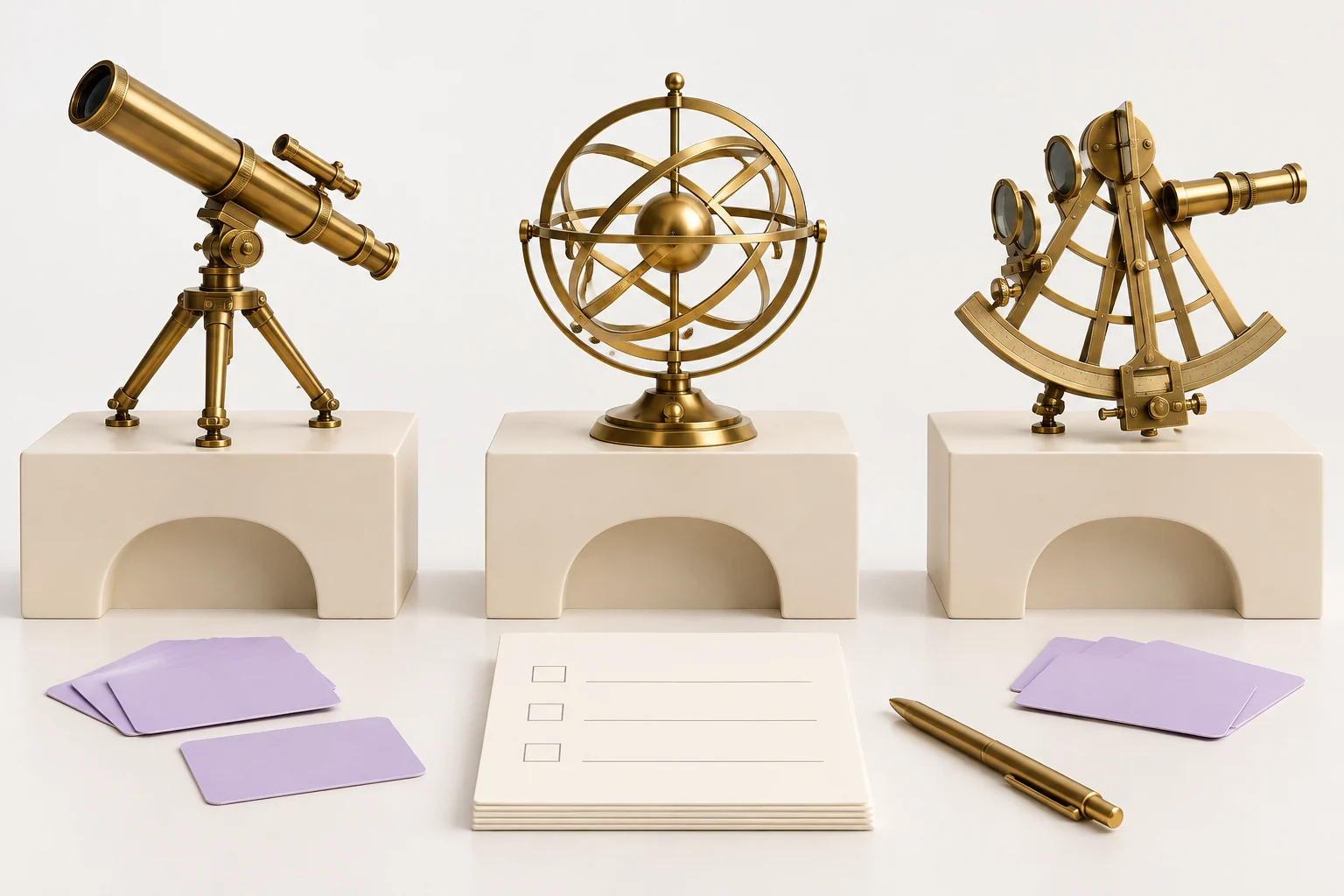
The observatory-workstation illustration is original conceptual artwork. Its equal-height stations do not encode a benchmark, score or universal winner. It represents a comparison process, not measured model outputs.
Choose for the Actual Work and Keep the Decision Reviewable
Select a candidate because it meets the workflow's acceptance criteria with an appropriate total effort. You may find that different stages justify different choices, but that should follow observed results rather than a name-based hierarchy applied to every task.
Retain a small accepted evaluation set and revisit it when requirements, model versions or tool interfaces change. A previous success is useful context, not a guarantee of identical future behavior. Keep the chosen model and settings explicit where they matter.
For a finished MOVO video, continue reviewing the generated scenes, exact captions, sound and saved export. A good planning-model decision supports the production; it does not replace the final creative and delivery checks.
Frequently Asked Questions
What are the documented roles of Sol, Terra and Luna?
Official OpenAI pages position Sol for complex professional work, Terra for intelligence/cost balance and Luna for cost-sensitive high-volume work, as reviewed on October 20, 2026.
Which one is always the best?
This guide establishes no universal winner. Test the actual task against consistent acceptance criteria.
Were models benchmarked for this article?
No. It combines official positioning with an independent evaluation method and proposed examples.
Does a faster first draft prove a better workflow?
No. Include correctness, revisions, reviewer effort and the path to an accepted result.
Are these models confirmed in MOVO?
No model access or integration in MOVO is established here.
Does a language-model choice guarantee video quality?
No. Inspect the actual generated motion, picture, sound and final export separately.