Choose What the Food Video Should Communicate
A food video maker can support a recipe introduction, a restaurant mood piece or a product promotion. Decide which job the video has before planning close-ups. A visual appetite cue and a verified cooking instruction require different evidence.
The Invideo food-video page presents a prompt-led creation workflow. Its media and editing features belong to that service and should not be copied into MOVO's capability claims.
Start an original culinary scene brief in MOVO with the dish, audience and main action. Keep actual ingredients, measurements and any product promises in an approved source. Generated food imagery can illustrate a story without proving that a recipe was prepared or tested.
Build an Ingredient, Action and Finish Sequence
Choose scenes with distinct roles. An ingredient view introduces the dish, a preparation action shows a useful change, and the final plate gives the viewer a clear payoff. Avoid using several nearly identical close-ups when one well-framed action would explain more.
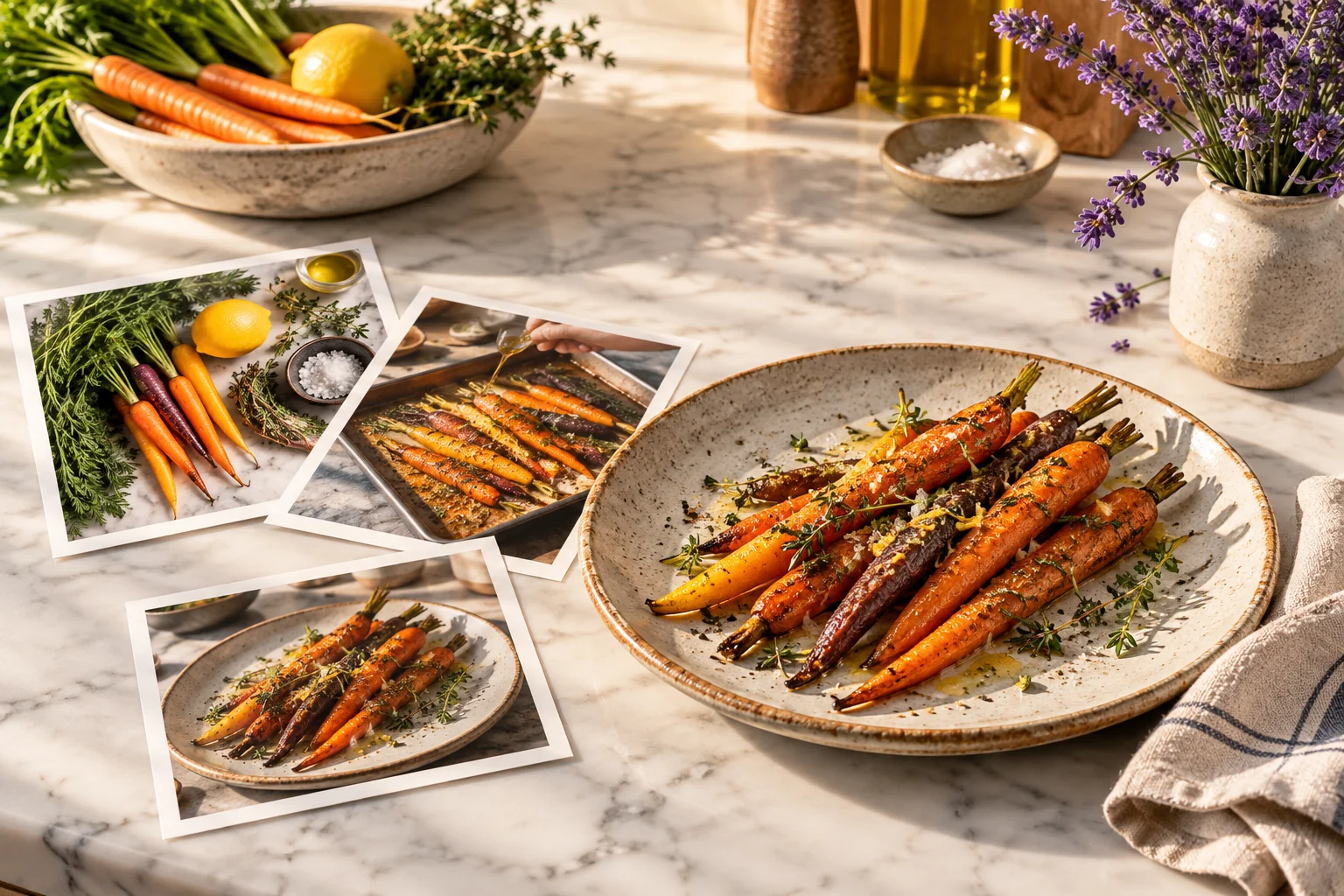
For a fictional roasted-carrot scene, the brief might establish washed carrots, show herbs being added and end on a ceramic serving plate. Describe the intended appearance without inventing cooking temperatures or safe preparation instructions.
Keep the visual order understandable. If a finished dish appears before the preparation, make that opening a deliberate preview. Do not let a missing middle scene imply a real cooking process happened exactly as the generated sequence shows.
Describe Texture, Light and Movement
Explain what the camera should reveal: a cut surface, a pour, a gentle stir or the final arrangement. Choose one primary action per shot so the food remains readable. Soft side light can reveal texture without requiring an elaborate camera move.
Keep the dish and props consistent. Plate color, ingredient quantity and serving style can change unexpectedly between generated scenes. Record the few details that matter most to the story and compare them through the complete clip.
Review appetizing appearance alongside physical coherence. Utensils should make sensible contact, a pour should land where intended and the food should keep a stable form. A beautiful isolated frame does not approve movement that becomes distracting.
Separate Illustration From Recipe and Product Evidence
Use actual approved material for factual recipe details and claims about a product or meal. A generated garnish or ingredient can look plausible while being absent from the real dish. Check labels, menu names and descriptions against the source.
If the video teaches a process, review the instructions independently and avoid presenting invented footage as a documented test. If it promotes a restaurant, distinguish illustrative atmosphere from photographs of the actual food and venue.
Add exact text in a finishing workflow where spelling and quantities can be inspected. Do not rely on generated packaging or handwritten labels for critical information. Keep the visual story connected to the verified message.
Finish the Food Story for Its Destination
Use MOVO to develop original scene material, then finish precise cuts, captions and approved sound with suitable controls. Give the important preparation movement enough time to read rather than hiding it under fast transitions.
Watch the saved output on the intended screen. Check that the dish remains clear, text stays readable and the ending communicates the planned next step. A video maker cannot establish actual recipe success or guarantee customer response.
Retain the approved food brief, factual sources, accepted clips and final master. The roasted-carrot illustration here is original conceptual artwork, not a photographed restaurant menu item, tested recipe or evidence of a real cooking result.
Frequently Asked Questions
Does generated food imagery prove a recipe was tested?
No. Keep recipe evidence and factual instructions in an approved source.
What should a short food-video sequence show?
A clear context or ingredient view, a meaningful action and a finished visual payoff.
What matters during motion review?
Food shape, utensil contact, pours, ingredient continuity and readable framing.
Can I rely on generated labels for quantities?
No. Add and inspect exact text with suitable finishing controls.
Does this entry promise a stock-food library?
No specific external library or provider feature is promised.
Is the carrot image an actual menu photograph?
No. It is original conceptual artwork.